Product Air Prepares Trane and Coleman Furnace Replacement Guide for Western Washington Homeowners
Eli Nikolin explains how heating stages, airflow, efficiency, and installation requirements affect a household's
Press Release Disclaimer: This is a press release distributed through the XPR Media network. It has not been independently verified by our newsroom.
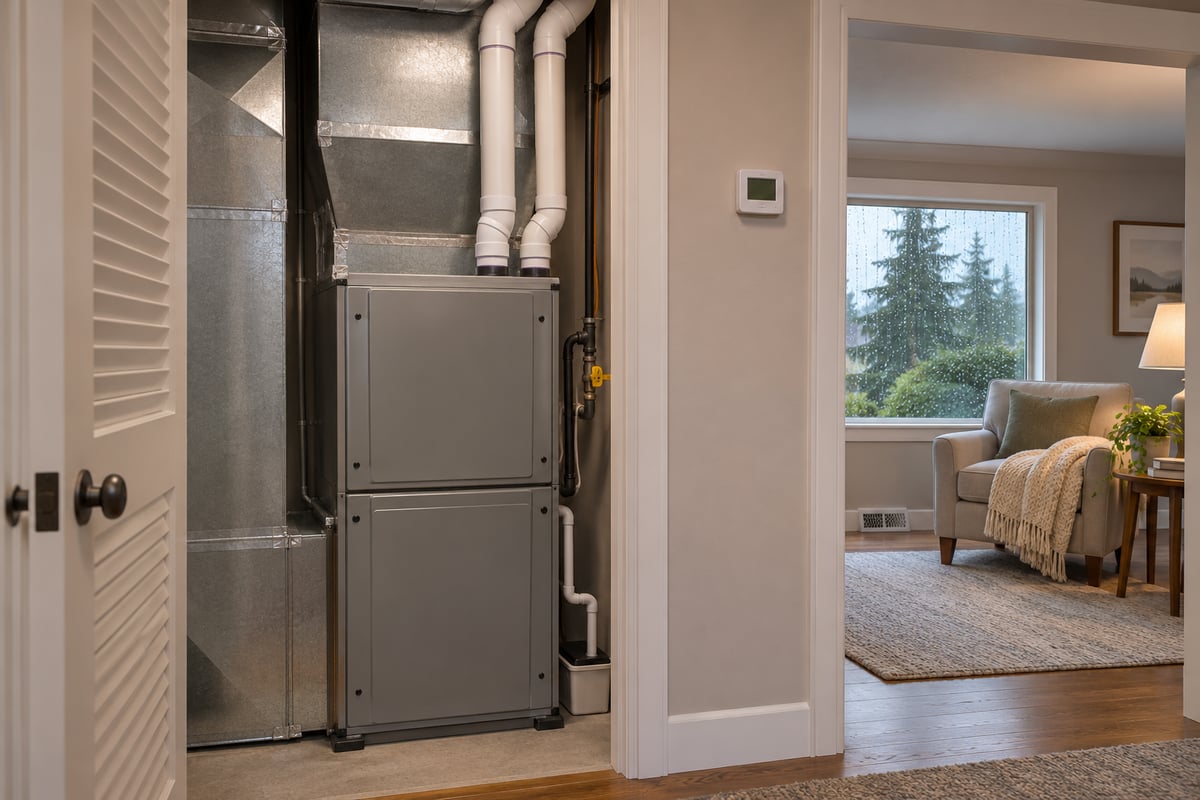

Eli Nikolin explains how heating stages, airflow, efficiency, and installation requirements affect a household’s replacement decision.
MARYSVILLE, US — November 19, 2026 — Product Air Heating, Cooling, and Electric has prepared a homeowner guide to replacing older gas furnaces with Trane and Coleman equipment in Seattle and Western Washington. Written by co-founder Eli Nikolin, the guide explains how to compare heating comfort, fuel efficiency, and the complete scope of installation before choosing a replacement.
The recommendations address a common purchasing question: what does a homeowner receive by paying more for a different furnace model? Nikolin separates changes in heating output and airflow control from potential gas savings, helping readers understand the purpose of each feature.
Two-stage models provide a starting point
Nikolin’s starting recommendations are the Trane S9X2 and Coleman Z9ET. Both have a lower and a higher heating setting, allowing the furnace to respond to different levels of heating demand. Proper sizing and setup remain necessary for the intended comfort benefits.
The guide also discusses the Trane S9V2-VS and Coleman Z9VT for households that place greater value on quiet operation and more flexible airflow control. For homeowners satisfied with single-stage heating who want to keep replacement affordable, Nikolin identifies the Trane S9X1 and Coleman Z9ES as options to consider.
“If a simpler furnace will do what you need, I should tell you,” Nikolin writes in the guide. “If spending more would make a useful difference, I should explain what you will notice.”
Efficiency gains need context
The guide explains annual fuel utilization efficiency, or AFUE, and why an efficiency rating does not predict the total household utility bill. In a simplified comparison delivering the same useful heat, moving from 80% to 96% AFUE reduces calculated gas use by about 16.7%. Moving from 96% to 97% reduces it by approximately 1%.
Actual costs depend on weather, gas prices, thermostat settings, and the previous equipment’s condition. The comparison excludes fixed utility charges and gas used by other appliances. Comfort improvements can still justify an upgrade even when the additional gas savings are modest.
The installation is part of the decision
Nikolin encourages homeowners to compare complete proposals rather than equipment prices alone. The guide covers heating capacity, ductwork, thermostat controls, venting, condensate drainage, applicable permits, and the distinction between equipment warranty coverage and repair labor.
It also explains why the capacity printed on an existing furnace should not automatically determine the replacement size. Changes to the building and the condition of the air distribution system can affect the appropriate equipment choice.
The guide is intended to support informed conversations about furnace replacement, with recommendations based on the home’s requirements and the homeowner’s priorities.
About Product Air Heating, Cooling, and Electric
Product Air Heating, Cooling, and Electric provides heating, cooling, and electrical services in Western Washington. Its furnace work includes evaluating replacement options and the installation requirements associated with the selected equipment. Eli Nikolin is a company co-founder and an HVAC professional serving the region since 2014.
###
Media Contact
Company: Product Air Heating, Cooling and Electric
Contact Person: Eli Nikolin
Website: productairheating.com
Phone: 425-340-3576