Evolve Collision Centers Highlights the Importance of Proper Testing Conditions for Accurate ADAS Calibration
Ardmore, PA - November 18, 2026 - PRESSADVANTAGE - Evolve Collision Centers is highlighting the importance of proper
Press Release Disclaimer: This is a press release distributed through the XPR Media network. It has not been independently verified by our newsroom.

Ardmore, PA – November 18, 2026 – PRESSADVANTAGE –
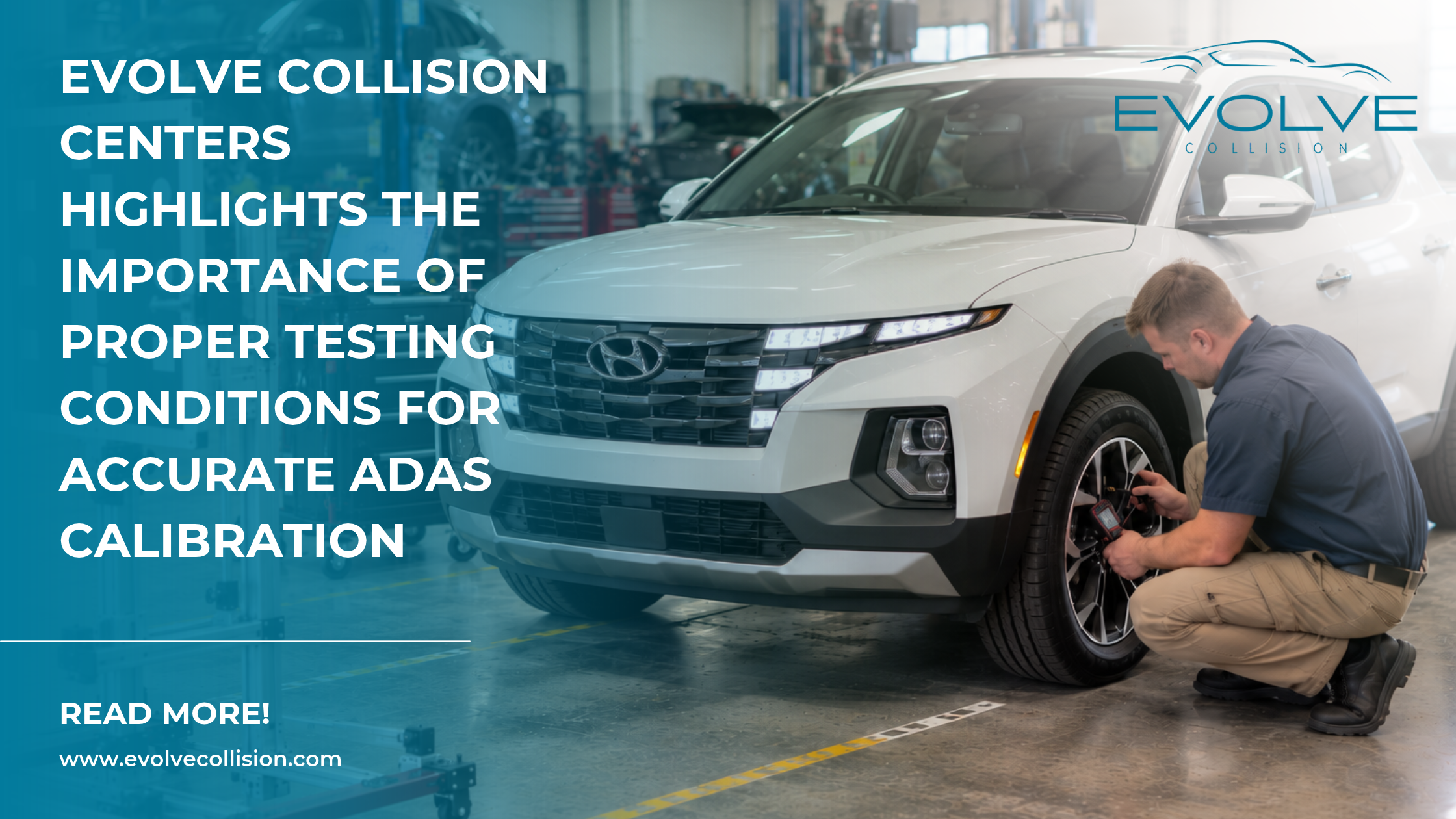
Evolve Collision Centers is highlighting the importance of proper testing conditions when performing Advanced Driver Assistance Systems (ADAS) calibration following collision repairs. The company’s November consumer guidance explains how environmental conditions, vehicle positioning, and manufacturer-defined testing procedures can influence the completion and accuracy of camera and radar sensor calibration.
Modern vehicles use cameras, radar sensors, and electronic control modules to support driver-assistance features such as automatic emergency braking, adaptive cruise control, lane departure warning, and blind spot monitoring. Depending on the vehicle and the repairs performed, manufacturer instructions may require calibration to establish or verify the operating parameters of affected systems.
The November guidance focuses on three factors that influence calibration procedures: controlled workshop conditions, vehicle preparation and positioning, and the driving environment required for certain dynamic calibrations. These requirements vary by vehicle manufacturer, model, and installed equipment.
The first consideration involves the environment used for static ADAS calibration. Static procedures generally require a stationary vehicle and specified calibration equipment, which may include targets, reflectors, or other manufacturer-approved tools. Accurate setup is important because cameras and sensors must be evaluated according to defined positioning and measurement requirements.
Some manufacturer procedures specify minimum working space, target distances, lighting conditions, and the absence of objects that could interfere with sensor readings. Reflective surfaces, nearby equipment, or inconsistent lighting may affect certain calibration processes. The applicable requirements depend on the sensor technology and the instructions provided for the vehicle.
Floor conditions can also influence static calibration setup. Certain procedures require a level surface or specify acceptable floor tolerances to support accurate vehicle and target positioning. When these requirements are not met, the calibration equipment may not be aligned with the vehicle according to the manufacturer’s specifications.
Evolve Collision Centers provides information about electronic system procedures through its scanning and calibration services. These services address diagnostic evaluation and manufacturer-defined calibration requirements that may apply after collision-related repairs.
The second consideration involves preparing the vehicle before calibration begins. Manufacturer instructions may require verification of tire pressures, vehicle ride height, wheel alignment, or other conditions that influence sensor orientation. Some procedures also specify vehicle loading, fuel level, or steering position before testing.
These preparation steps help establish the conditions required for the calibration procedure. A vehicle with incorrect ride height or unresolved suspension damage may not meet the manufacturer’s specified setup requirements. Calibration should therefore be considered in relation to the mechanical and structural repairs completed before testing.
Sensor mounting conditions represent another important part of vehicle preparation. A camera or radar unit may appear undamaged while its mounting bracket or surrounding structure has shifted during an impact. When applicable, technicians must evaluate these conditions and address related damage before attempting calibration.
The third consideration involves dynamic calibration procedures. Unlike static calibration, dynamic procedures require the vehicle to be driven under conditions specified by the manufacturer. These may include designated speed ranges, suitable lane markings, appropriate visibility, or other roadway characteristics.
Weather and traffic conditions can affect whether the required driving environment is available. Heavy rain, snow, poor visibility, or obscured lane markings may prevent certain camera-based procedures from being completed as specified. Road conditions must therefore be considered when scheduling dynamic calibration.
Dynamic calibration requirements are not identical across vehicle brands. Some systems require a prescribed driving sequence, while others may complete calibration after specified conditions have been maintained for a sufficient period. Certain vehicles also require both static and dynamic procedures for the same repair situation.
Evolve Collision Centers provides additional information about vehicle restoration through its collision repair services. Collision repair planning may need to account for calibration prerequisites when damage affects sensor mounting locations, wheel alignment, suspension components, or other systems related to electronic driver-assistance technology.
The guidance also distinguishes between completing a calibration procedure and confirming that the required testing conditions were satisfied. A procedure that cannot be completed because the environment does not meet manufacturer specifications should not be recorded as successful. Additional preparation or a different testing environment may be necessary before the procedure can be completed.
Diagnostic scanning may identify certain electronic faults, but it does not establish that calibration targets were positioned correctly or that required driving conditions were met. Calibration results must be interpreted according to the procedure performed and the completion criteria specified by the manufacturer. Scanning and calibration therefore remain separate operations within the electronic repair process.
Repair scheduling can also be affected by testing requirements. Static calibration may require access to suitable workspace and equipment, while dynamic calibration may depend on roadway and weather conditions. These considerations can influence the sequence of repair operations and the anticipated completion timeline.
For Ardmore and surrounding Main Line drivers, the November guidance explains why ADAS calibration is not simply a matter of connecting diagnostic equipment to a vehicle. Appropriate calibration requires the correct procedure, suitable testing conditions, and verification that applicable manufacturer requirements have been met.
Not every collision requires ADAS calibration, and not every system uses the same testing method. The necessary operations depend on the vehicle’s equipment, the repairs performed, and manufacturer instructions. Following those instructions helps determine whether calibration has been completed under the specified conditions.
Evolve Collision Centers also provides information about manufacturer-focused repair qualifications through its OEM certification page. Manufacturer repair procedures remain the basis for determining calibration methods, equipment requirements, and applicable testing conditions.
The November consumer guidance emphasizes that testing conditions are a technical requirement rather than a minor scheduling detail. Proper vehicle preparation, suitable calibration environments, and accurate completion records contribute to the documented calibration process following applicable collision repairs.
About Evolve Collision Centers
Evolve Collision Centers provides collision repair, auto body repair, paint refinishing, glass services, paintless dent repair, and vehicle scanning and calibration services. The company serves Ardmore and surrounding Main Line communities in Pennsylvania, with repair procedures determined by vehicle-specific damage assessments and applicable manufacturer requirements.
###
For more information about Evolve Collision Centers, contact the company here:
Evolve Collision Centers
Butch Cantz
(267) 692-6699
bcantz@evolvecollision.com
2560 Haverford Rd, Ardmore, PA 19003